
Key takeaways
- Virtual pet apps emphasize continuity with one companion.
- Pet games often emphasize progression, challenge, or collection.
- Daily pace and pressure matter more than the category label.
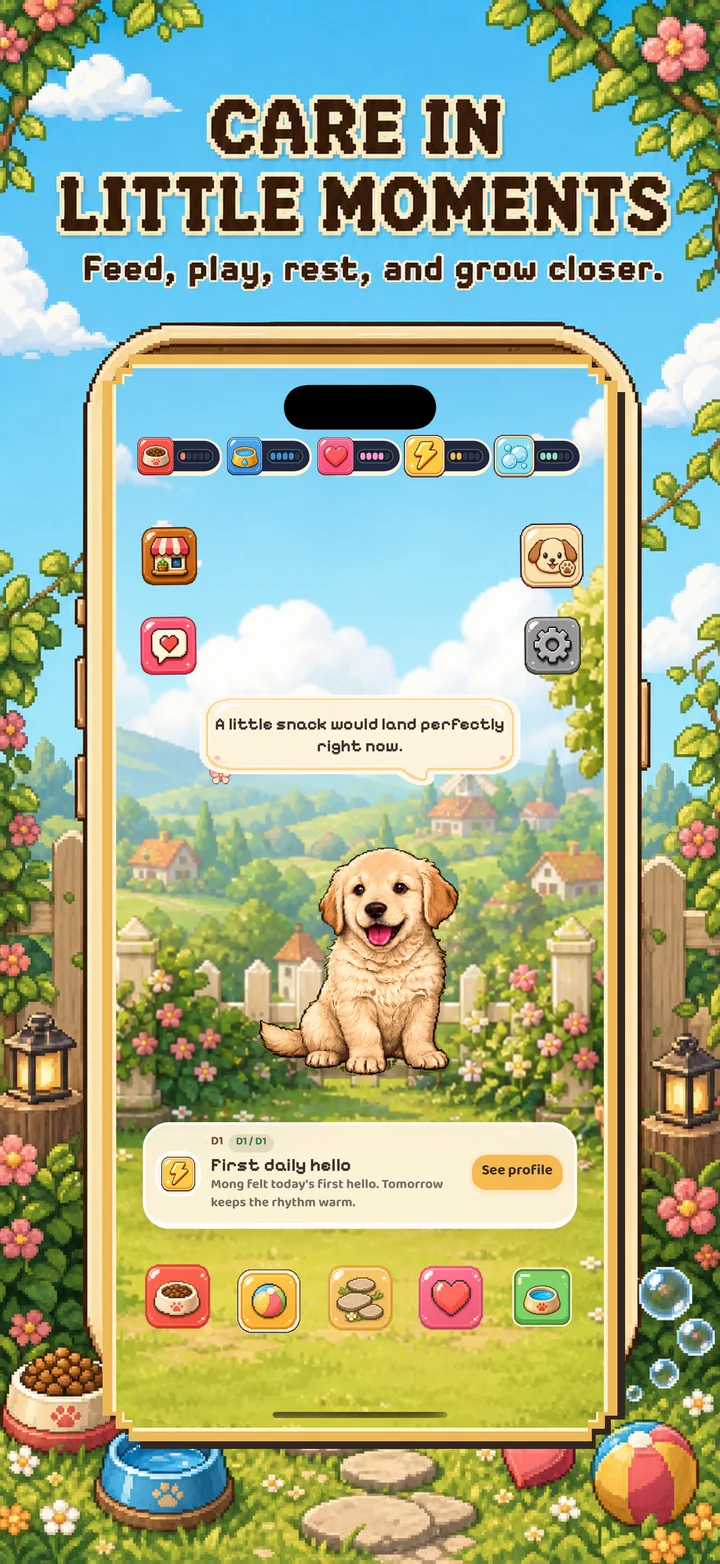
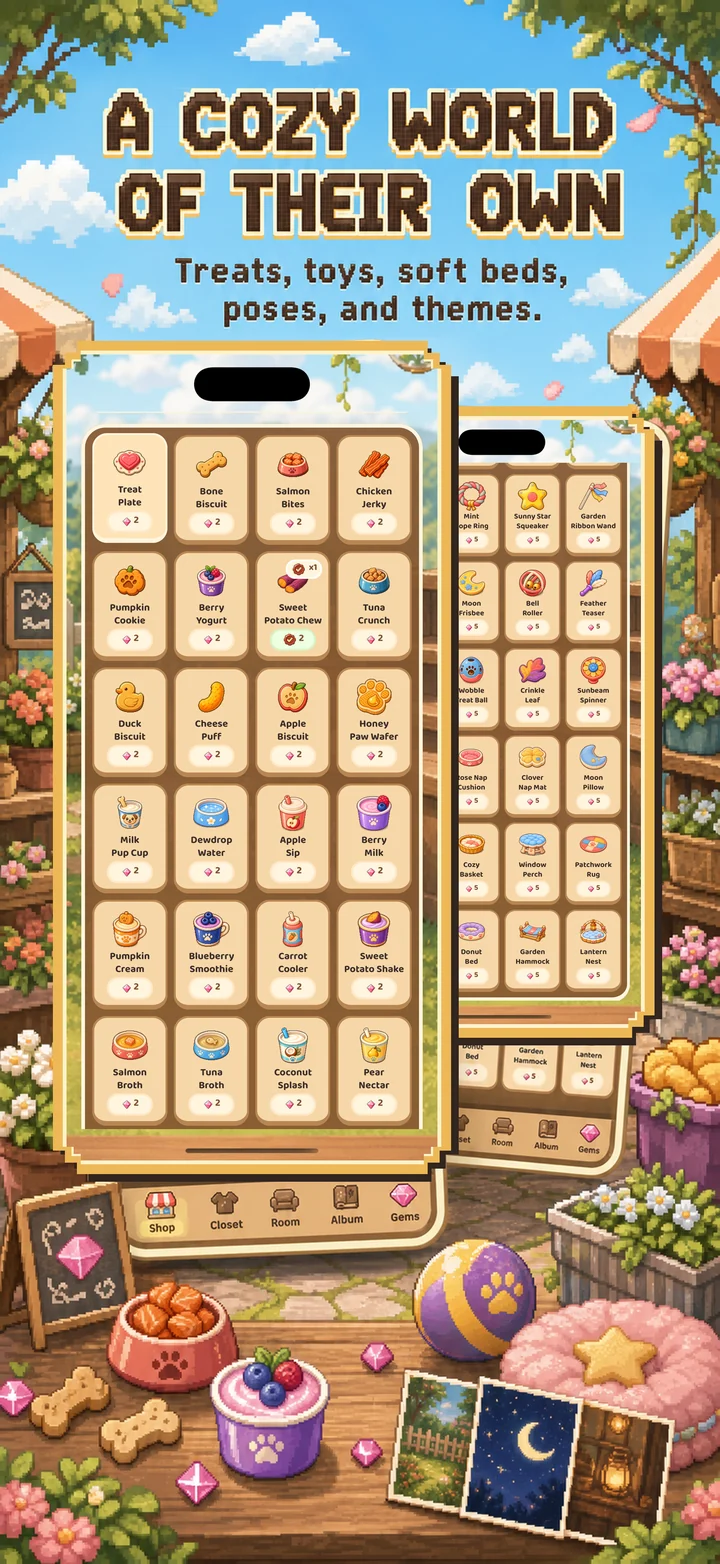
- Mongchi mixes personal care with walks, finds, poses, and themes.
Compare the reason you return
If you return mainly to see how one companion is doing, the experience behaves like a virtual pet. If you return mainly to finish stages, increase a score, or optimize a collection, it behaves more like a pet game. Neither model is inherently better; they fit different moods.
Look at pressure, not just features
Two apps can both offer food, play, customization, and collectibles while feeling very different. Check whether missed days create punishment, whether sessions can stay short, and whether the app keeps presenting new tasks after the quiet moment you wanted is already complete.
Where Mongchi sits
Mongchi starts with one photo-inspired companion and a garden that supports small care visits. Walk finds, expressions, memories, and themes add light progression, but the central loop remains returning to the same companion. AI chat is generated and clearly labeled; it is part of the character experience, not a claim that the real pet is speaking.
| Question | Relationship-first virtual pet | Progression-first pet game |
|---|---|---|
| Main goal | Stay connected to one companion | Complete goals and unlock systems |
| Typical session | Short, repeatable check-in | Longer or challenge-based play |
| Personalization | Identity and continuity | Builds, collections, or cosmetics |
| Good fit when | You want a calm ritual | You want goals and mastery |
Sources and product review
Mongchi is a gentle entertainment companion. AI chat replies are generated and are not your real pet's thoughts or professional advice.